Where It Came From
The product team saw an opportunity to drive more competitive bidding — and better bids for the requesting client — informed by what competitors were doing in the market. The business wanted price competition. The design problem underneath it was more interesting than "build an auction."
The Real Problem (the pivot)
Competitive bidding is easy to want and hard to design, because pure price competition damages the exact relationships legal teams depend on. Turn firms into commodities racing to the bottom and you win on cost once, then lose the trusted-counsel relationships that matter for high-stakes work. So the problem was: how do you turn up cost pressure without turning the client's law firms into interchangeable vendors they've now alienated?
The Constraint
Matter sensitivity varies
A routine, high-volume matter can tolerate aggressive open competition. A sensitive litigation or M&A engagement cannot. One fixed auction model couldn't serve both.
Relationship risk is real
Full public price competition can embarrass incumbent firms and sour long relationships. The design had to give legal teams a way to compete on price without forcing that.
It had to stay auditable
Like everything in the platform, the auction had to produce a consistent, defensible record — no informal or opaque side deals.
The Design Decision
The core decision was configurable transparency — a single control that lets legal teams tune how much competitive pressure to apply, per matter:
No transparency
Firms see only their own bids. Protects relationships and sensitive matters; minimal competitive pressure.
Partial transparency
Firms see competitor bid amounts but not identities. Real price pressure, anonymized to protect relationships.
Full transparency
Firms see competitor bids and identities. Maximum pressure, for situations where open competition is appropriate.
That one control is the whole design insight: it lets the same auction mechanism serve a routine procurement and a sensitive engagement, because the legal team — not the tool — decides how much competition each matter can bear.
Supporting decisions kept it usable and honest: real-time ranking and undercut feedback so firms could adjust live; AI-enhanced insights (from the Expert AI phase) surfacing value, not just lowest price; automatic alignment of winning bids to pre-defined scope and thresholds; everything logged for governance.
The Outcome
Transformed a manual RFP negotiation into a live, competitive, auditable auction.
Gave legal teams granular control over transparency — balancing cost pressure against fairness and firm relationships per matter.
Collapsed scattered emails, spreadsheets, and one-off negotiations into a single governed workflow.
Deliverables
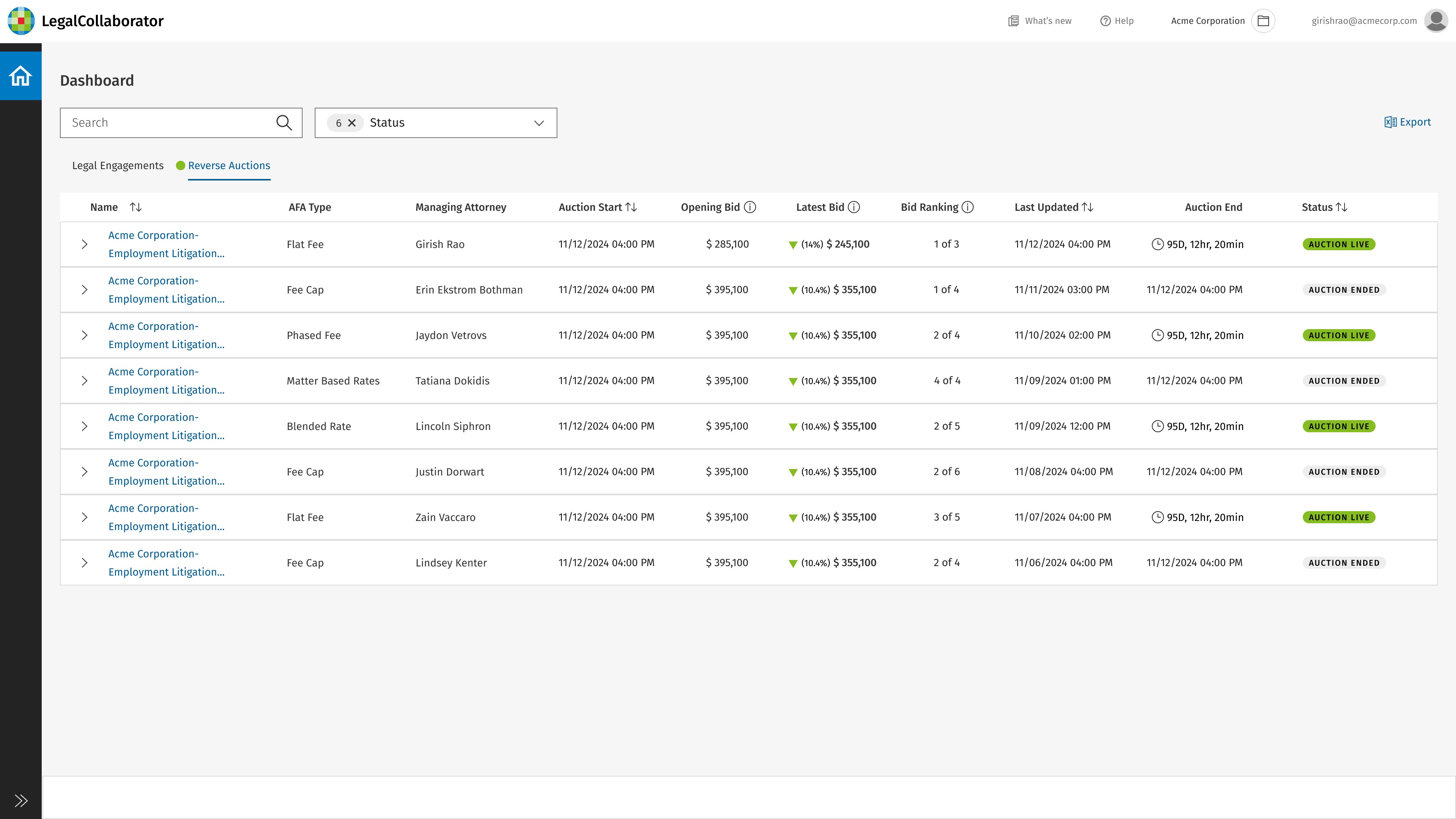
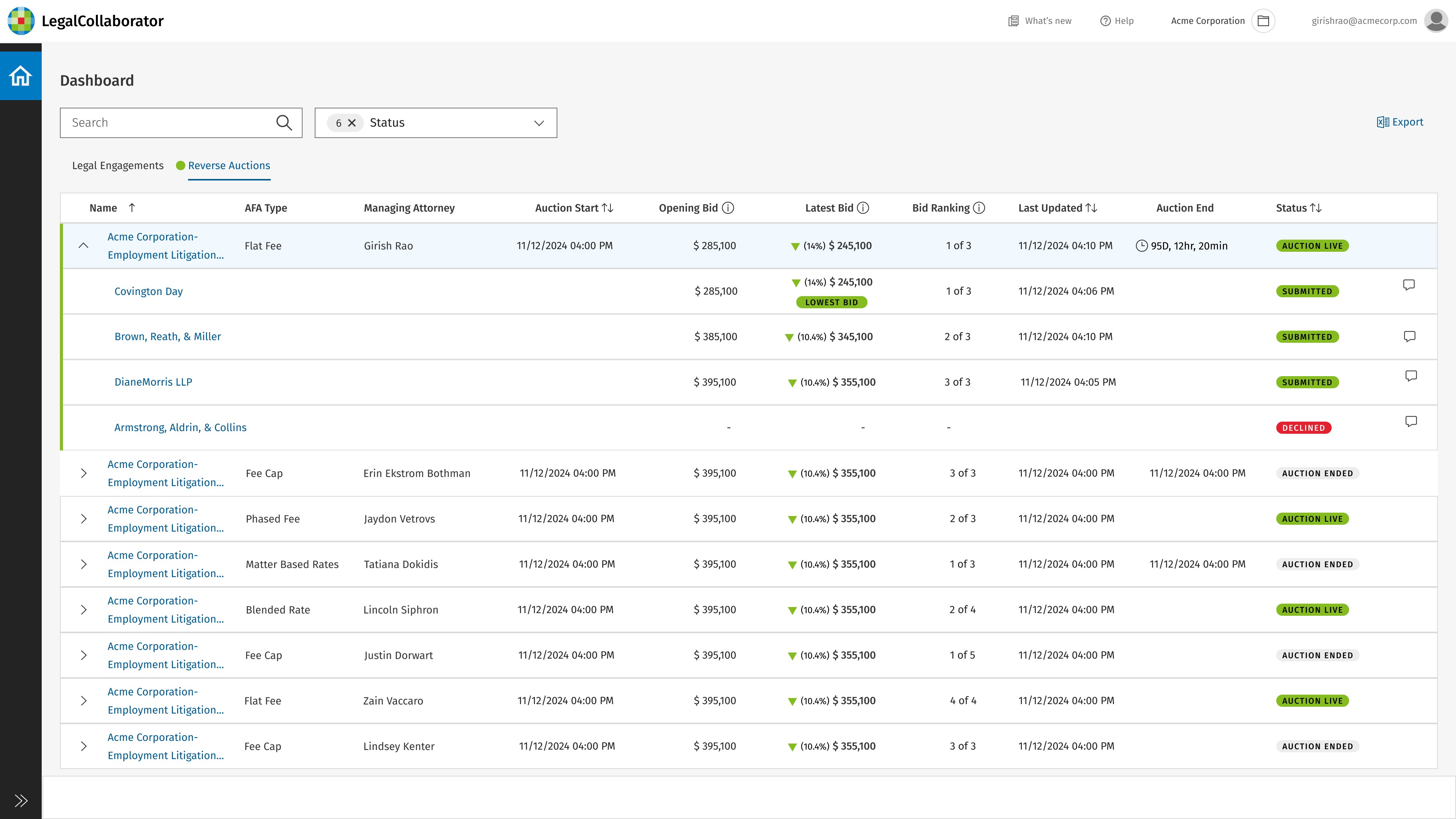
Dashboard
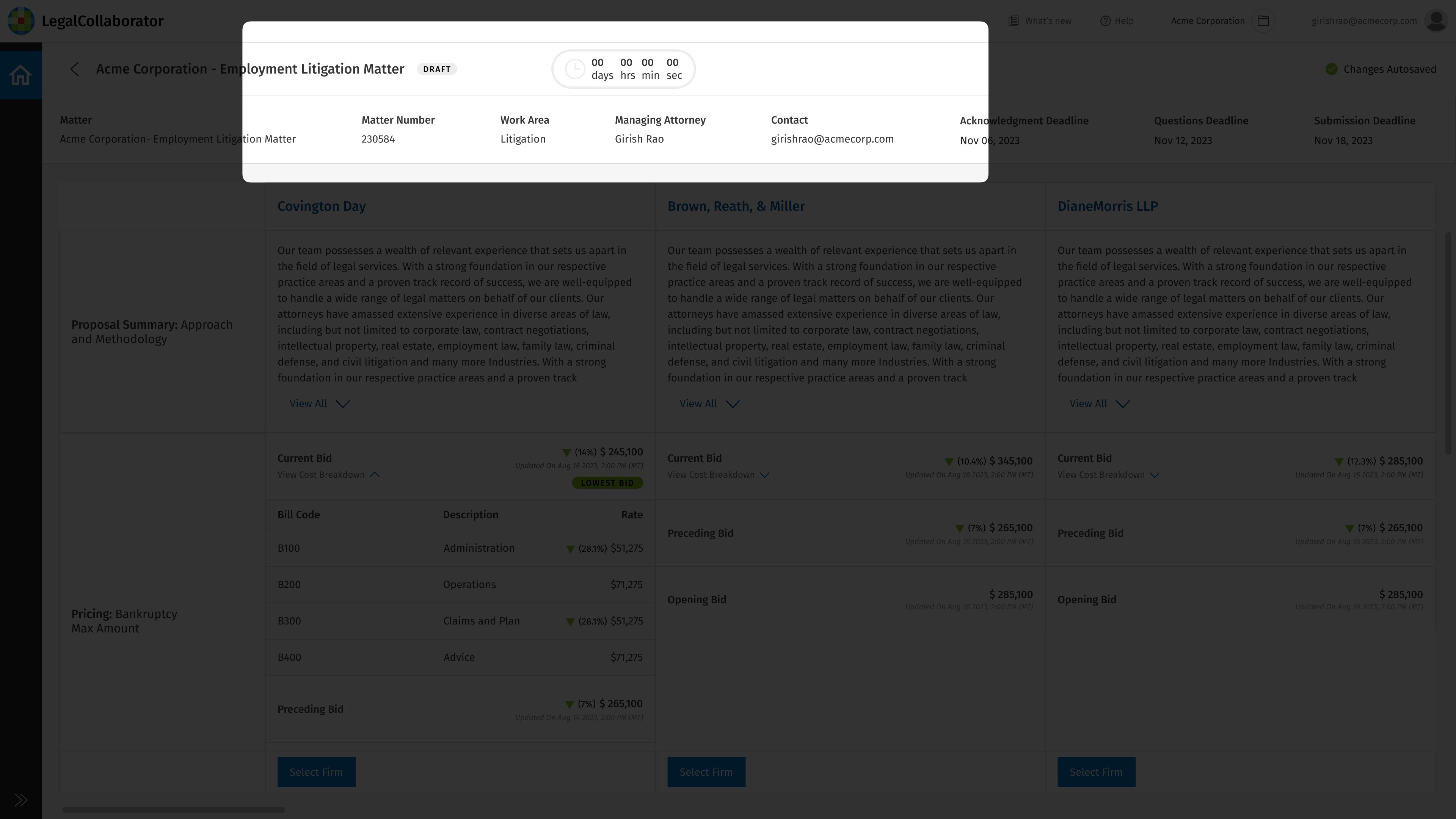
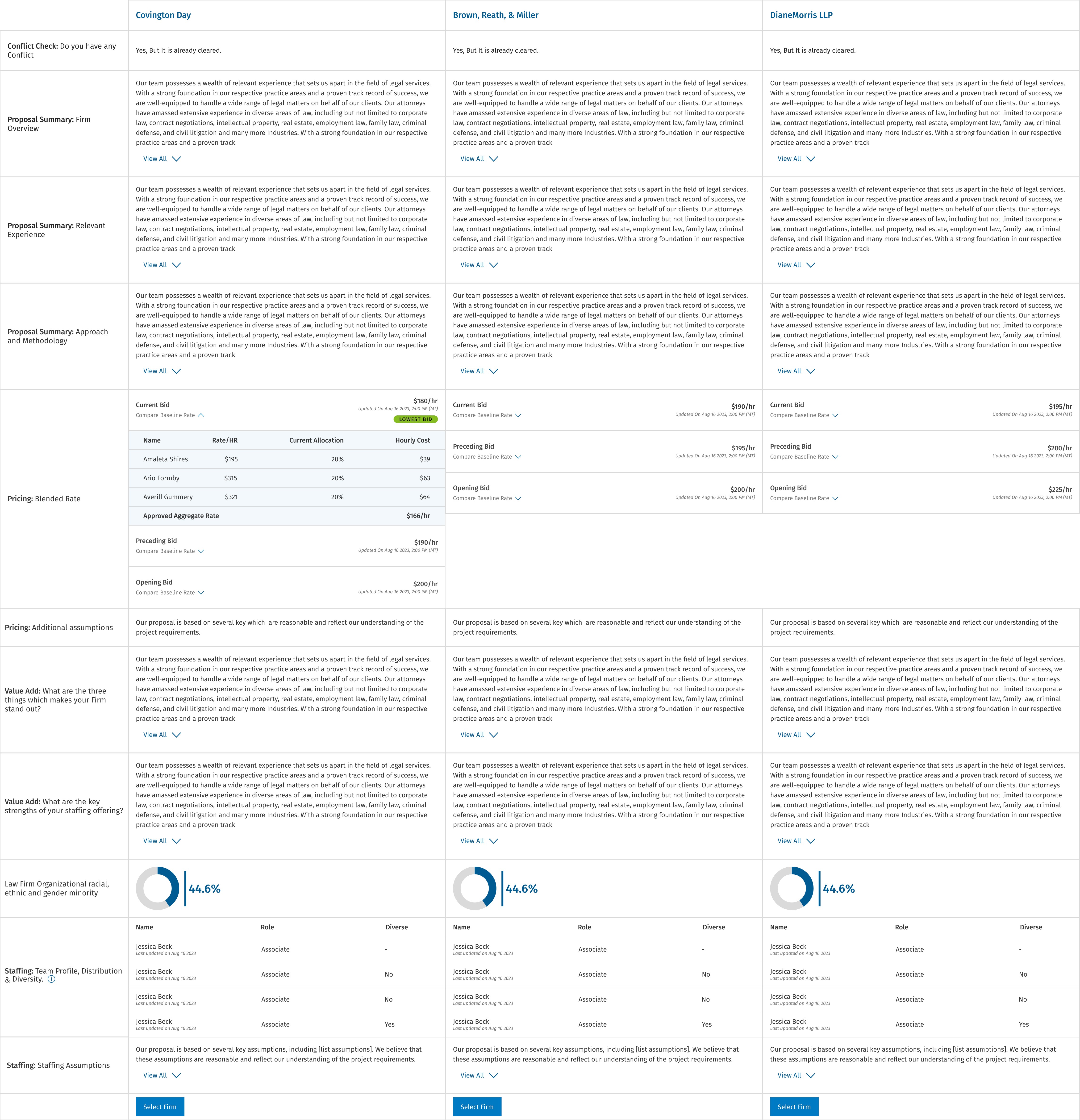
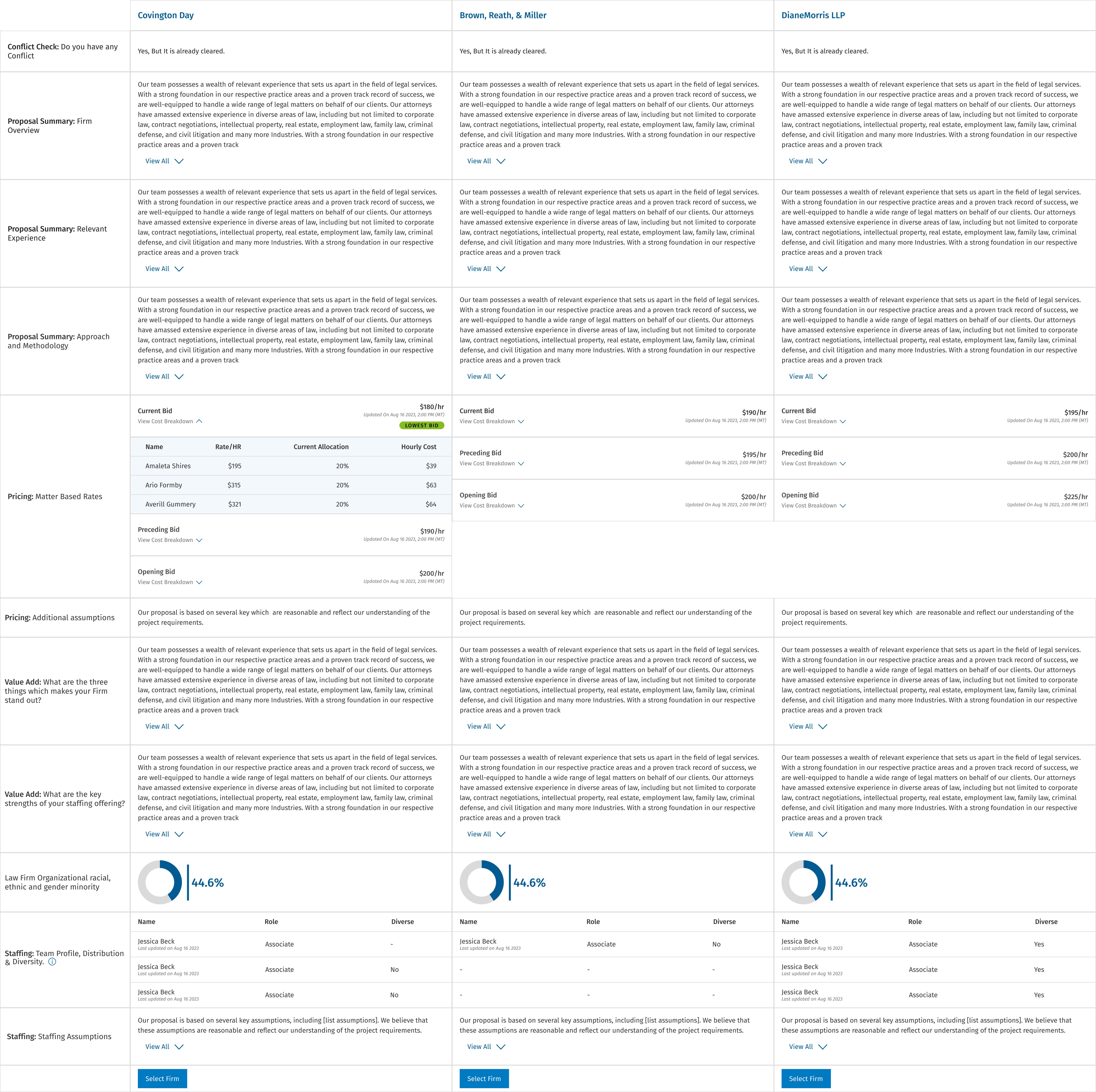
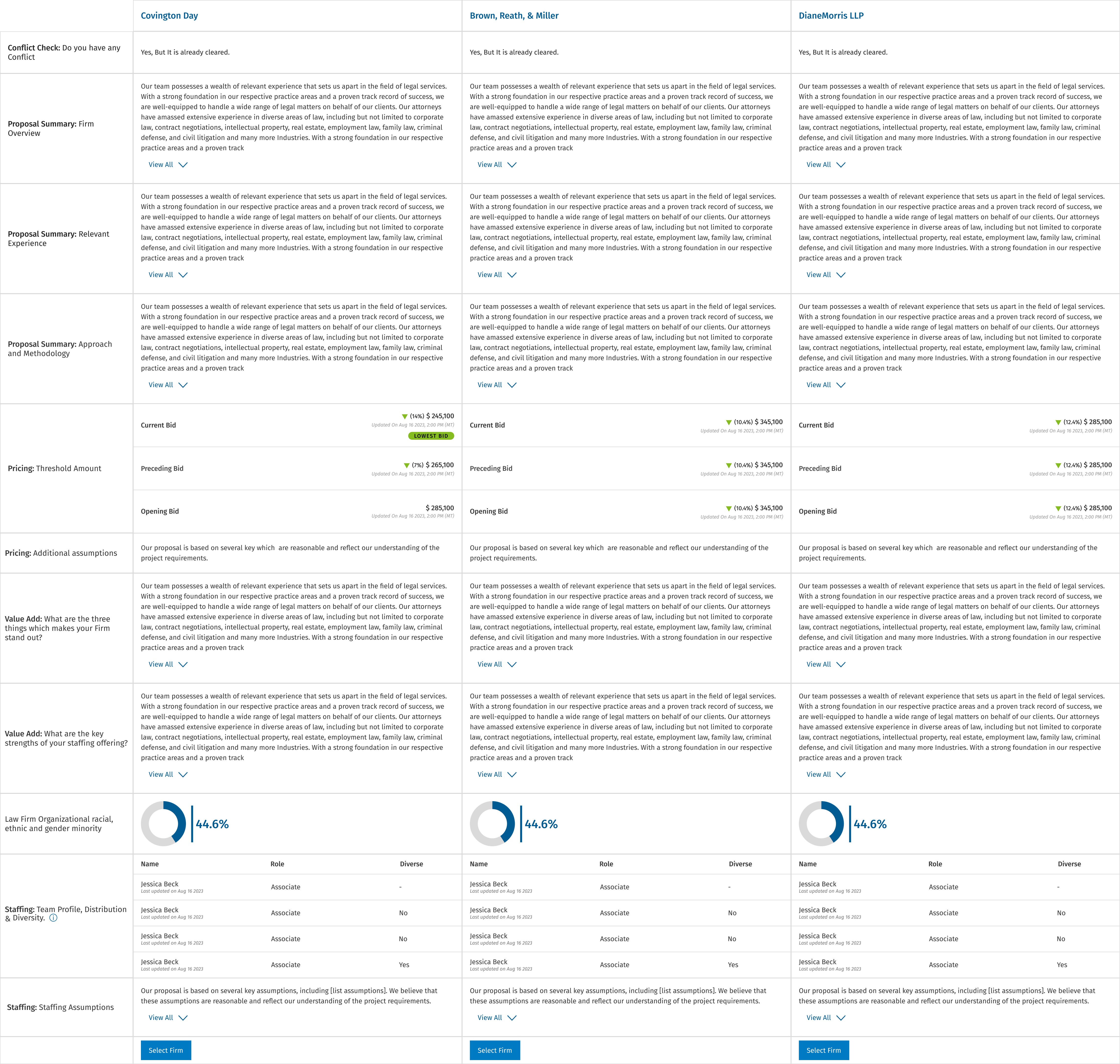
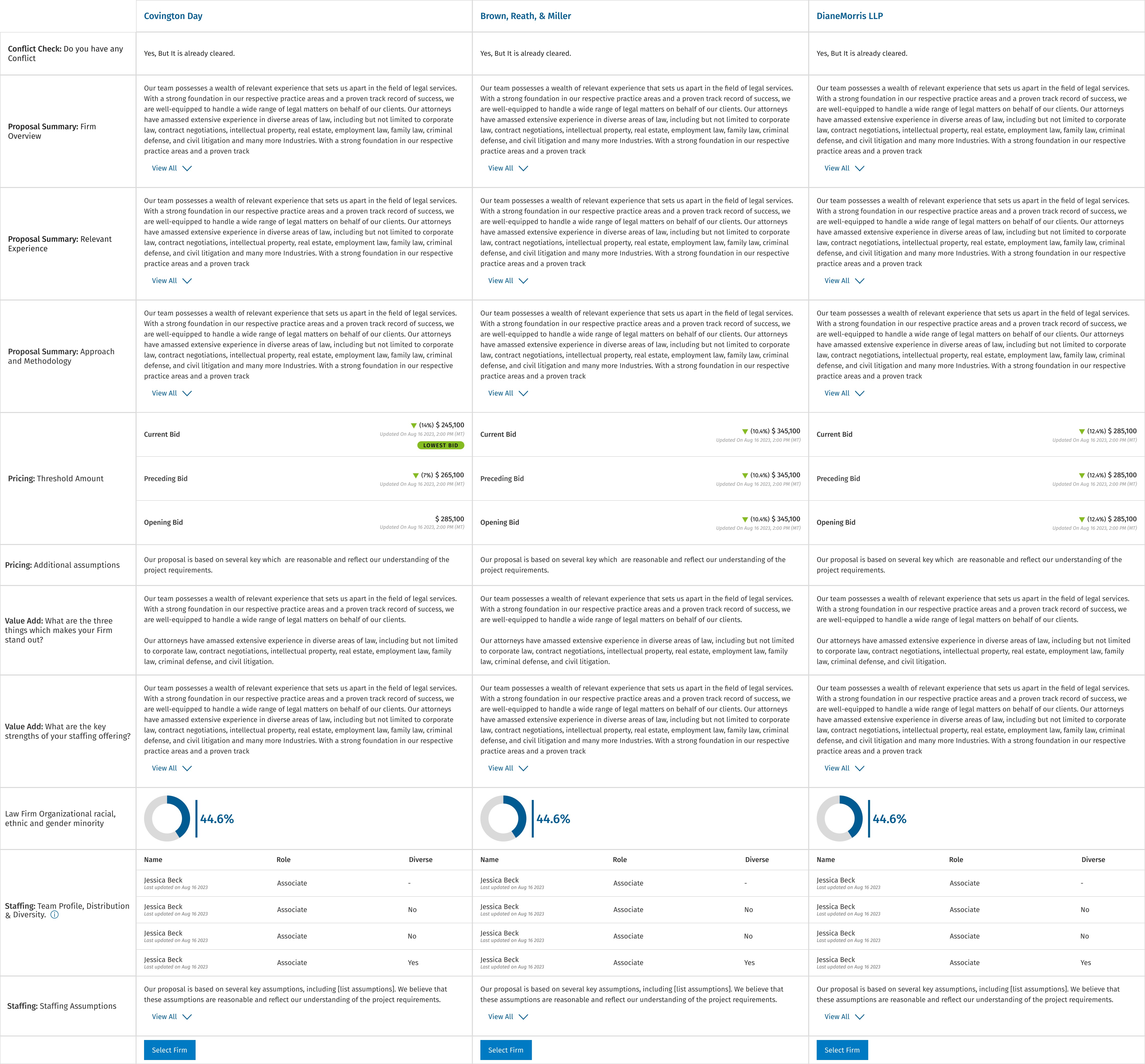
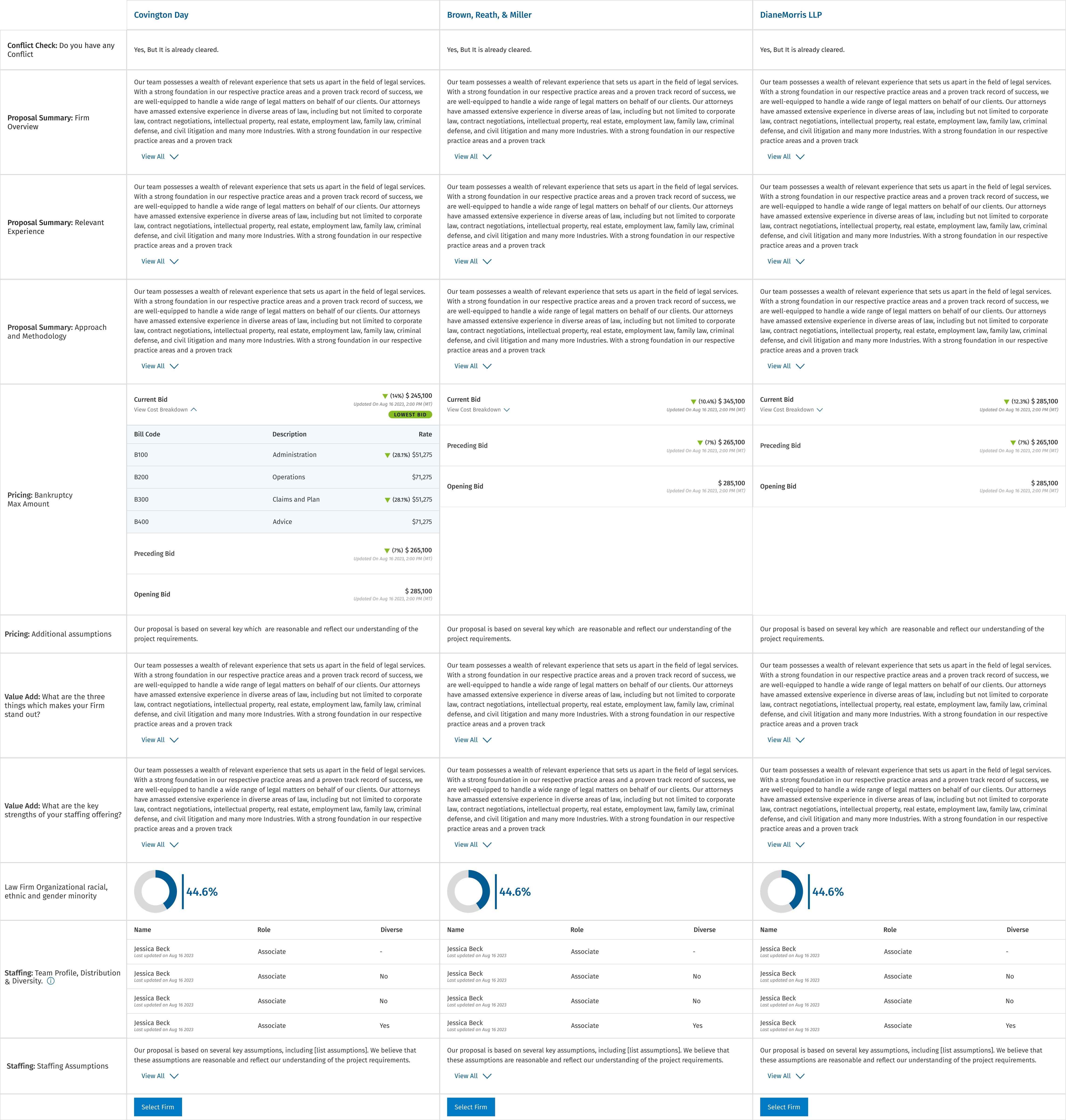
Proposal Comparison Screens
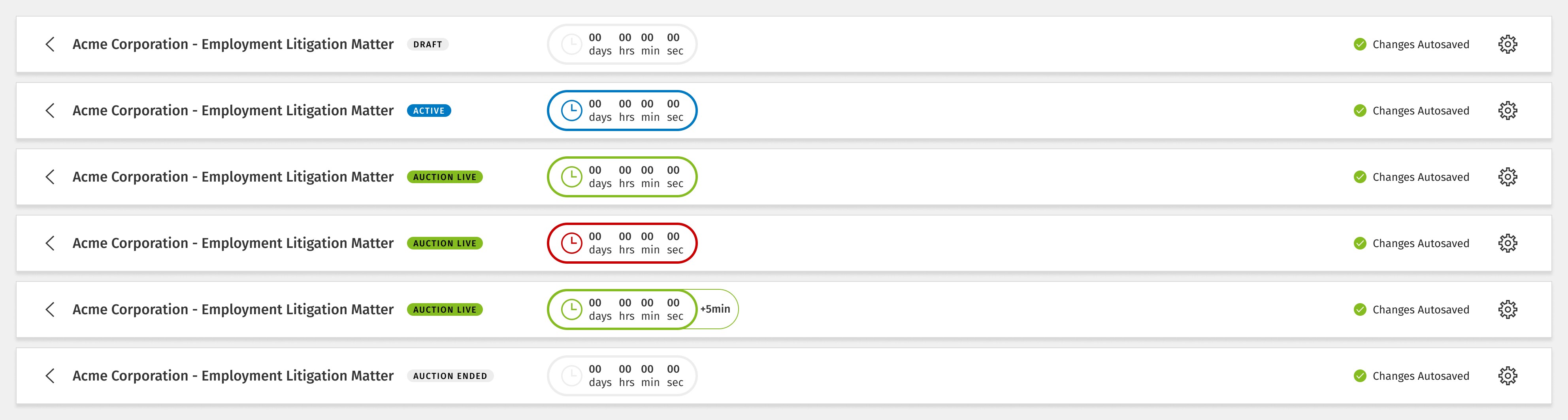
Active Timer